Saturday, January 5, 2013

Countering climate denial on college campuses

Christopher Monckton at Union College
On March 5, 2012 Christopher Monckton, a self-promoted speaker who questions the reality of climate science, presented his views of climate change science at Union College. Monckton's visit, funded by Collegians for a Conservative Tomorrow (CFACT), was one stop of a nationwide campus speaking event.

You can see video of Monckton's presentation here. You can also read coverage about his visit and the response by Union's community in the Concordiensis. The purpose of Monckton's visit was to muddy the waters with respect to climate change - to cast doubt on the validity of findings that have been overwhelmingly supported by the scientific community.
Erin Delman ('12) and other students

Instead, however, Monckton's visit galvanized students and faculty to highlight the widely accepted facts of climate change and the nature of expert scientific consensus on this topic.
We directly contrasted Monckton's statements with posters and reading materials outside his speaking location, engaged him during the Q&A session that followed his remarks, and most significantly, hosted a "Reality of Climate Science" discussion immediately following the CFACT event. These efforts were detailed in a recent issue of EOS.

Far from casting doubt on climate change, the attention and publicity surrounding Monckton's visit engaged our community in a discussion of climate science to a far greater extent than would have occurred if he had not come to campus.

I was interested in the extent to which his visit and the counter-presentations shifted student attitudes about the realities of climate change. In October 2012 I surveyed members of the sophomore, junior, and senior classes at Union College. 125 students participated, and results showed that students whose opinions shifted were far more likely to have become more convinced of climate change's reality, and the role that humans are playing. (A more complete presentation of results can be seen here, from a poster I presented at the meeting of the American Geophysicists' Union in 2012.)

So, thank you Mr. Monckton, and CPATH, for bringing your viewpoint to campus. Your visit did change students' minds - just not in the direction you expected.
Coverage of Monckton's visit in a variety of media

Friday, December 14, 2012

Funding Sustainability: $25,000 Available for Innovative Student Projects

Two years ago, students collected 600+ signatures from Union students approving the allocation of $5 from each student’s Student Activities fees to a fund to be used for projects that would have a measurable reduction of our ecological footprint. Petitioning for signatures lead to many long meetings with Student Forum, the creation of the VP of Sustainability position on Student Forum, the writing of Bylaws and thus The Union College Green Fee was born.

This past fall, the Green Fee Governance Committee (GFGC), charged with the responsibility of advertising, overseeing the application process as well as proper allocation of funds, has worked very hard to frame the first Request for Proposal (RFP) of The Union College Green Fee.

What exactly is the Green Fee you might ask?
The short answer is: $25K waiting to be used by Union students for sustainable projects.


Prior to the 2012-2013 academic year, Union has offered Presidential Green Grants (PGG’s), which have awarded a maximum of $2K to finance two types of sustainable projects. The first type is an on-campus project that lowers our carbon footprint. The second type is a research project with measures geared towards improving environmental conditions on a local or global scale. The funding of the PGG’s has and continues to be funded by President Ainlay’s Office as well as the Mellon Foundation Grant and is available to students, faculty & staff.

While $2K is more than adequate to satisfy a variety of smaller projects, it can be minimal for a larger-scale project. Potential projects include: installation of a solar panel array, a new bike sharing program, or a green roof that $2K would not cover. This is why a portion of students Student Activity Fee is funneled into a Green Fee Fund, which makes $25K available to Union students to see their sustainability projects realized.

So do you want 25 thousand dollars?

In order to access the fund, Union students can submit their proposals to the Green Fee Governance Committee, who will review proposals and allocate funding. The first round of proposals are due by the end of week 3 of winter term (January 25th, 2013), so start planning now!


Make sure to visit the  Garnet Goes Green Facebook page to locate the proposal guidelines and application. They are located in the “Photos” section.

If you have any questions please do not hesitate to contact the Chair or Vice Chair of the Green Fee Governance Committee.
-Chair: Jordan Pulling- pullingj@garnet.union.edu 
-Vice Chair: Maxfield Fey- feym@garnet.union.edu

Remember, you could go down in history as the backbone of an amazing sustainability project at Union!

Thanks and Happy Holidays from the Green Fee Governance Committee.

-Max


Wednesday, November 14, 2012

"Dirty energy makes dirty weather" - a phrase that may finally STICK!

Al Gore may have found the catchphrase that finally makes the connection between fossil fuels, climate change, and our everyday lives. He closed his Huffington Post Opinion piece with it, and his CurrentTV Network is airing "24 Hours of Reality: The Dirty Weather Report".

What's in a name, or in this case, a phrase?

EVERYTHING!!

Global warming - Not very threatening. "Dude, I like summer! Warmer weather means more flip-flops and less frostbite. Bring it on!"

Climate change - More accurate in that it implies effects beyond just temperature. But as with Global warming, "change" isn't so threatening.

But "dirty weather" trumps all of these - we can all understand it, and it makes a clear connection to exhaust and dirty fossil fuels.

In politics, LANGUAGE MATTERS! Republicans, under the tutelage of Frank Luntz have mastered the turn of a phrase for a generation - "Pro-life," "Death tax," and "Patriot Act," just to name a few.

Democrats have been woefully outgunned in the arena of political language (but see George Lakoff's Little Blue Book as an example of an effort to bring Democratic political language along).

But I think that "Dirty energy makes dirty weather" could stick in people's minds and actually influence policy in a profound way. Let's hope so - we need all the help we can get!


Monday, November 12, 2012

How Citizens United affects local environmental causes

Image courtesy of FairelectionsNY.org
UPDATE January 5, 2013 - You can read more about Richmond's relationship with Chevron in a recent New York Times story. 
____________________________________

The election of 2012 was notable for many things, including the wave of corporate money that was used to influence elections. As a result of the Supreme Court's Citizens United case, corporations can now contribute unlimited sums to elections on politics. Approximately $6 billion was spent on the 2012 election; almost $2 billion was spent in the Presidential election.

Interestingly, it isn't clear that all that money did much to influence the outcome in the Presidential election or even state-wide elections such as those for Senate. There is so much money coming in via FEC-regulated donations that the corporate donations may not shift the big races for President, Senate, Governor, etc., much at all. Consider Ohio: almost $150 million was spent on TV ads in Ohio. Do you really think that the 1000th political ad anyone saw changed her mind?

That's not to say that Corporate and other unregulated money didn't influence the election - just that its influence took place in the political understory - at the district or local level. Here, corporations get a real bang for their donation bucks - at the expense of good government and often the environment.

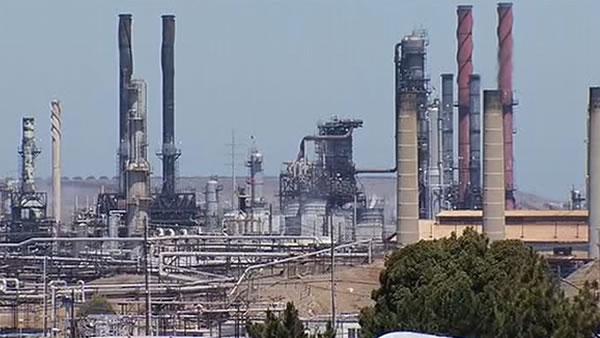
Chevron Refinery, Richmond CA
I know first-hand of one such example, from my own hometown of Richmond, CA. Some Union College students may have heard of Richmond if you have taken ENS100 - Introduction to Environmental Studies. I have presented the case study of the influence of Chevron USA, which has a large refinery in Richmond, on the city's politics.

Thanks to Citizens United, Chevron's influence on Richmond politics has gone nuclear.

Thursday, November 8, 2012

Union students propose ways to make campus operations more sustainable


Hannah Gardella and Nicole Julich
On Monday, students in Prof. Anouk Verheyden-Gillikin's and Jeff Corbin's Intro to Environmental Studies (ENS100) class presented posters describing proposals to make Union College's operations more sustainable. This poster session is always a highlight of the term, as it shows students' creativity and often is the germ of ideas that the College later adopts. Each of the posters presented not only a specific project and how it would be carried out, but also calculations as to the energy and/or monetary savings relative to the cost of installation. We hope that we'll be seeing some of them implemented in the near future!

Bonsal Brooks
Proposed projects included installation of hand-driers in residences, a fee system for laundry, heat-exchange in shower drains, grey-water collection and use, and an expansion of Octopus' Garden, just to name a few!

Hopefully, the next step for at least some of these projects is that they'll apply for some of the $25,000 that is available for student-proposed projects that save energy - the Green Fee!

Super-thanks to Meghan Haley-Quigley, Fred Puliafico, and Paul Matarrazo of Facilities for their help and willingness to answer many many questions.

The projects:
A Better Future is Biomass - Ali Smith, Karyn DeFranco and Victoria Cannillo
Ben Forman describes his poster

Davidson Hall Rain Water Collection - Maya Whalen-Kipp , Sonia Sandoval, and Jay Foster-Grover

When they remodel Humanities, let’s build a Green Roof! - Liz Devine, Yixin Hu and Bonsal Brooks

Feasibility of Greywater Systems and Alternative Water Saving Methods - Mathias Whitmeyer and Rachel Ross

Who Likes Hot Showers? U DO! - Benjamin Forman, Malory Bichunsky, Rachel Wyman and Matthew Gottlieb

Chad Laustrup
The Expansion of Octopus’s Garden - Jackie Goldenberg and Olivia Powers

To dry or Nott to dry? - Lauren Coryea, Victoria Cullinan and Elora Weil

Sloan Aqus Greywater System - Nicole Bartlett, Alex Tancrell-Fontaine and Alison Troy

Water Refilling Stations: A More Green Union - Chad Laustrup and Alec Weiss

Waterless Urinals - Dan Hurwitt, Gregory Bel and Todd Fichman

Olivia Powers and Jackie Goldenberg
Decreasing energy use through pay-per load laundry alternative - Nicole Julich, Hannah Gardella, Daniel Tinklepaugh and Alex Husain

What is in store from a second Obama Administration?

Image: President Barack Obama waves to supporters after his victory speechWith Barack Obama's reelection, we can start to imagine what his second term will look like in terms of environmental issues.

While environmental issues played a very small role in the campaign, Obama did frequently tout initiatives to encourage alternative energy. He can also point to significant administrative and regulatory initiatives - including auto efficiency, mercury pollution, and EPA regulation of CO2 emissions. There was no significant legislative environmental achievement of Obama's first term, although that is as much a reflection of a hostile Congress and the focus on the economy as anything else.

I expect that Obama will continue to push things that the Energy Department, EPA, etc. can do to move environmental issues forward. However, I do not foresee a push, say, a comprehensive energy bill through Congress.  I also do not expect any movement to put a price tag on carbon emissions, as good a step as it would be.

Where he could do so much more would be to take the example that Mayor Mike Bloomberg and Governor Andrew Cuomo have set and start LEADING on the issue of climate change, instead of hiding from it. Sandy's landfall finally woke up the media and helped the public make the connection between climate change and their lives. Exit polls found that 41% of voters thought that the President's handling of Sandy was "very important" or "important" in their decision. In an election decided by 2%, that is a big number.

Will Obama lead? Time will tell. One cause for optimism is that he mentioned climate change in his Victory Speech late Tuesday night:
We want our children to live in an America that isn’t burdened by debt, that isn’t weakened up by inequality, that isn’t threatened by the destructive power of a warming planet.
After an entire debate season with no mention of climate change, that was a welcome nod to those of us who want action.


Saturday, November 3, 2012

Happy Fall! Does it seem late?

I don't know about you, but this week I'm ready to think about anything other than the election...or hurricanes...So how about celebrating fall? Ah, raking leaves, the crisp air, and cider donuts.

Yet, does it seem like fall is (forgive me) falling later than it used to? My wife, who grew up in upstate NY, recalls the chore of doing the final leaf-rake before she could go Trick-or-Treating for Halloween. Right now, though,my trees in Niskayuna are at most only half-way through dropping their leaves. Is it our imagination, or is fall getting later?

Yes, fall is really getting later. There are two explanations: Climate change, and a shift toward new species.

First, climate change. Our warmer climate - already at least 0.5 degrees C warmer than early in the 20th Century - is causing plants and animals to adjust the timing of major annual events such as migration, emergence, or senescence. That means that our springs are starting earlier and our falls are ending later. Since 1970, New York's average temperature has warmed by 2 degrees C warmer; our winters are 5 degrees C warmer!

Japanese barberry - still green while the rest of the forest has dropped its leaves
That's not the only explanation for more green left in our forests in November. The other reason is that our forests are changing. Invasive species like Japanese barberry, autumn olive, or honeysuckle are now common in the forests of the northeast. A study published in Nature by Syracuse University's Jason Fridley has demonstrated that such invasive species have extended their growing season by four weeks in the fall! This extra time to photosynthesize and acquire resources may be a key element to their success compared to our native flora.

What does this mean for our forest? Well, many things.